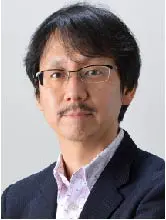
BIOGRAPHY
Hiromi Mochiyama is a professor of the University of Tsukuba, Japan. He received the B.E. and M.E. degrees from Waseda University, Tokyo, Japan, in 1993 and 1995, respectively, both in electrical engineering, and the Doctoral degree in information science from the Japan Advanced Institute of Science and Technology (JAIST), Hokuriku, Japan, in 1998. After working with JAIST, National Defense Academy of Japan, and Nagoya Institute of Technology (the endowed chair by Toyota Motor Corp.), he joined the Faculty of the University of Tsukuba in 2007 as an Associate Professor. Since then, he has been leading the Flexible Robotics Laboratory. His research interests include system theory of soft robotics and haptics. From 2010 to 2011, he served as Deputy Director of the Bureau of Science, Technology and Innovation Policy, Cabinet Office, Japan. Since 2024, he has also held a concurrent position at the University of Tsukuba, Malaysia.
IEEE ACTIVITIES
COMMITTEES/BOARDS:
- RAS Vice President of Financial Activities (2022-2023)
- RAS Conference Activity Board Member (2022-)
- RAS Finance Activity Board Member (2024)
REGIONS: 10
SECTIONS/CHAPTERS: Tokyo
CONFERENCES:
- Finance Co-Chair, ICRA2009.
- Finance Chair, ARSO2009.
- Finance Chair, IROS2013.
- Finance Chair, Ro-Man2015.
- IROS2017 Workshop Co-organizer, Smart Mechanics – Fusion of Softness and Rigidity in Robot Mechanism
- Senior Editor of the IROS Conference Paper Review Board (2018-2020).
- ICRA2020 Workshop Co-Organizer: Beyond Soft Robotics: Pioneer Perspectives and Interdisciplinary Collaboration.
- Program Co-chair, ARSO2021.
- Finance Co-chair, IROS2022.
- Program Co-chair, IEEE/SICE SII2024.
- Finance Chair, ICRA2024.
MAJOR ACCOMPLISHMENTS
- As Finance Chair of ICRA 2024. I was instrumental in making the conference a huge success, with a record number of more than 7,000 participants, over 2,300 paper presentations and a wide variety of exhibitions and demonstrations. I managed to keep the surplus at an appropriate level despite the large budget.
- As the main finance chair of IROS 2022, I helped to make the conference a great success under the uncertainties by COVID-19.
- As the Vice-President of Financial Activities in 2022-2023, I contributed to the stable management of RAS during a difficult period of significant society staff changes.
- Since my RAS debut at ICRA 1996 in Minneapolis, I have contributed to RAS conferences not only as Finance Chair but also as author, workshop organizer, invited speaker, reviewer, AE and SE.
- As a soft robotics researcher, I have contributed to the development of robotics long time. I am one of the co-authors of a textbook on soft robotics “The Science of Soft Robots, – Design, Materials and Information Processing -”.
POSITION STATEMENT
(If elected to the position, what are your plans and how will they help support the mission of IEEE RAS; Up to 500 words)
One of the most important roles of AdCom members is to make decisions that lead RAS in the right direction based on their extensive experience of society activities. With my experience as Vice-President of Finance and Conference Finance Chair, I believe that I can make decisions that maximize the benefits of the RAS members especially active young students from a balanced financial perspective.
I currently work both in Kuala Lumpur, Malaysia and in Tsukuba, Japan. I think that I can play a role in expanding the great activities of RAS to the wider region from East Asia and Southeast Asia taking advantage of the locality. For example, only a few Southeast Asians attended ICRA 2024 in Yokohama.I will support new initiatives to enable more Southeast Asians to attend major RAS conferences. These new initiatives will have a positive diversity effect on the rest of the region.
New good ideas for RAS activities must be implemented in the future. Successful implementation requires a good understanding of the complex society management system in cooperation with the society staffs. During the time as vice-president of finance, I tried to explain complex financial activities (e.g. how much money is available this year, the budgeting process, etc.) in simple terms and illustrations. This type of effort and experience will be also useful for working as an AdCom member.
I believe that new symbiotic ideas are needed for the further development of RAS. I can learn from Japanese roboticists who have an experience to grow IROS from a small workshop to one of the RAS flagship conferences. I can also learn from the Malaysian people, who have the wisdom to co-exist with a multicultural population. I hope to continue thinking about this difficult issue with all the RAS members.
QUALIFICATIONS
- As a recent Vice-President for Finance (2022-2023) and Finance Chair of recent major RAS conferences (IROS2022, ICRA2024), I am fully aware of the current state of the RAS.
- As a roboticist for more than 25 years, I understand the history and recent developments in robotics. Based on the history of robotics I will be able to make the right decision.
- I have experience working not only in universities, but also in industry-related laboratory and in the Cabinet Office’s Council for Science and Technology Policy (CSTP). I am able to judge things from a broad perspective.
- I have experience to commit the activities of other academic societies such as the International Federation of Automatic Control (IFAC), the Robotics Society of Japan (RSJ), the Society of Instrument and Control Engineers (SICE), the Japanese Society of Mechanical Engineers (JSME). I will be able to bring the benefits to RAS based on the management experiences of these societies.
- Currently, I work both in Malaysia and in Japan. I will be able to learn new symbiotic ideas directly from them.